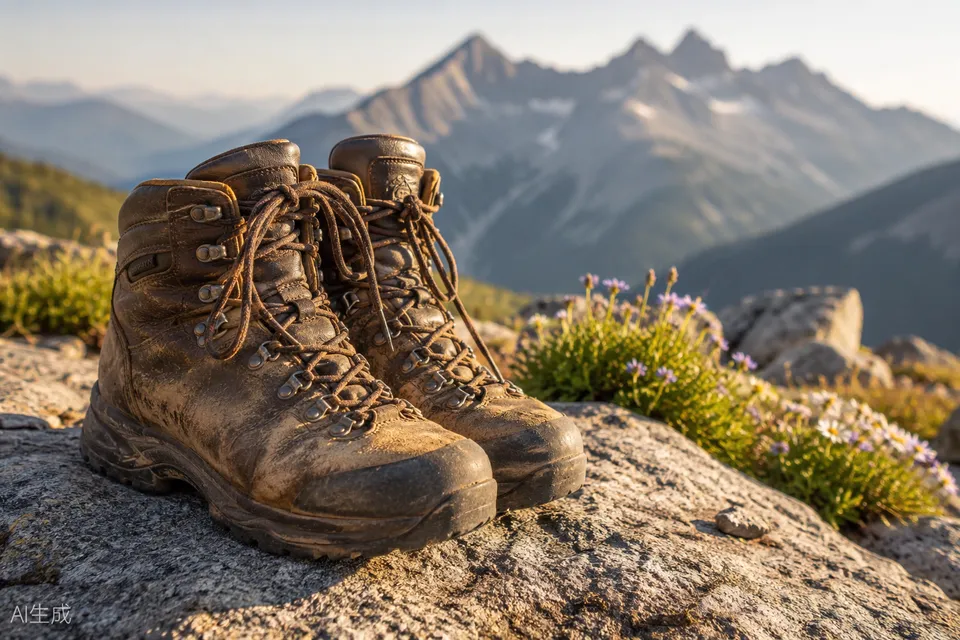
How to Fit Hiking Boots: The 6-Point Check Experts Use
How we fund this site: when you buy through links in this article we may earn a commission at no extra cost to you. Our rankings are never for sale — read how we test.
More boots get returned for bad fit than bad design. Run these six checks — the same ones our testers use — and you'll walk out with boots that work from mile one.
The 6-point fit check
1. Shop in the afternoon, wearing hiking socks. Feet swell up to half a size during the day and on trail. Fit to your biggest foot at its biggest.
2. Thumb-width in front of the toes. Kick the wall (or the store's incline ramp): your toes should not touch the front. Toe bang on descents is how toenails die.
3. Locked heel. Walk up and down an incline. Your heel may lift a few millimeters, but it shouldn't slide. Heel slip = blisters, guaranteed.
4. No pressure points. Flex, kneel, side-step across a slope. Any hotspot in the store becomes pain at mile 5. Don't count on 'breaking in' pressure.
5. Width is real. If the ball of your foot feels squeezed, ask for the wide version — several of our top boot picks come in genuine wides.
6. Ladder-lace and re-test. Lacing changes fit dramatically. A heel-lock (runner's loop) fixes most heel slip without overtightening the toes.
Three lacing fixes worth knowing
- Heel slip: the heel-lock loop through the top eyelet, pulled back and down.
- Toe bang on descents: a surgeon's knot at the instep to clamp the midfoot while leaving toes relaxed.
- Top-of-foot pressure: skip an eyelet over the tender spot.
Frequently asked questions
Should hiking boots be tight or loose?
Snug through the heel and midfoot, roomy in the toes. 'Comfortably firm' — never tight, never sloppy.
Do hiking boots stretch?
Leather stretches and molds noticeably (that's break-in); synthetic uppers barely change. Buy synthetics that fit now; buy leather that's 90% right.
When should I replace the insoles?
Stock insoles are usually the weakest part of a boot. If you need more arch support or your feet fatigue early, a $40 aftermarket insole (Superfeet-style) often transforms an average boot.
Fit solved? Find your pair in our hiking boot tests or trail runner picks.
Gear mentioned in this guide
Prices and availability update at the merchant's site.
Best OverallSalomon X Ultra 4 GTX
A light, agile low-cut hiker with a locked-in fit and Contagrip outsole that grips wet rock better than anything else we tested.
Best BudgetMerrell Moab 3 Mid WP
The world's best-selling hiking boot for a reason: out-of-box comfort, wide sizing options, and a price that's hard to beat.
Best for ScramblingLa Sportiva TX4
An approach shoe with a sticky Vibram Megagrip sole and climbing-zone toe that eats fourth-class terrain for breakfast.